When speaking of Laos, one cannot overlook the profound role of Buddhism in everyday life.
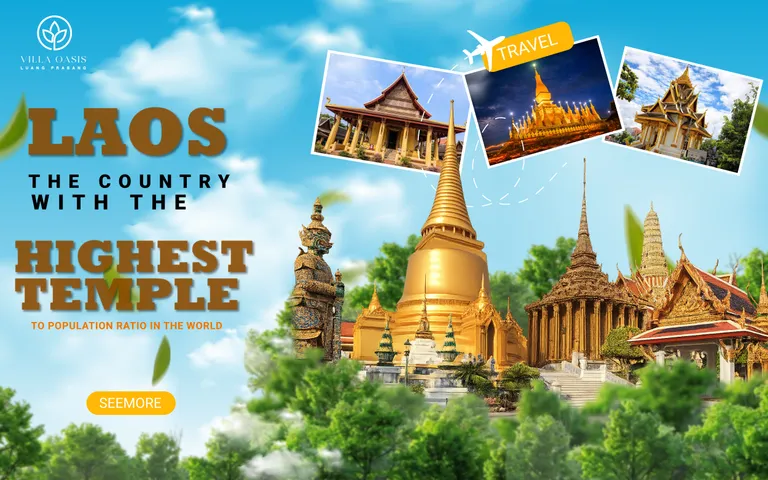
Laos is widely recognized as the country with the highest ratio of temples per capita in the world, with approximately 1,400 temples spread across the nation.
This remarkable number reflects not only religious devotion, but also the deep connection between temples, culture, and community in Lao society.
Temples as the Heart of Lao Community Life
In Laos, temples are more than places of worship.
They serve as:
- Spiritual centers for meditation and reflection
- Educational spaces where children learn values and traditions
- Gathering places for festivals and ceremonies
- Community hubs that bring people together
Temples and stupas play a vital role in uniting villages, generations, and ethnic groups throughout the country.
Famous Temples Across Laos
Among the more than 1,400 temples, several have become national cultural and historical symbols, including:
- Pha That Luang – the most sacred monument and national symbol of Laos
- Wat Si Muang – closely linked to local beliefs and city guardianship
- Wat Sisaket – one of the oldest temples, known for its thousands of Buddha images
Each temple carries its own story, yet all reflect the harmony between religion, history, and Lao architectural art.
Temples as a Unifying Force Among Lao Ethnic Groups
Laos is home to many ethnic communities living across mountains, valleys, and river plains.
Despite cultural diversity, temples serve as a shared spiritual ground.
Regardless of language or background, people gather at temples during festivals, full-moon days, and important religious events.
Buddhism thus acts as a bond that connects communities, fostering peace, understanding, and social harmony.
Architectural and Artistic Beauty of Lao Temples
Beyond their spiritual significance, Lao temples showcase refined craftsmanship and aesthetic traditions:
- Gracefully curved roofs
- Intricate carvings and decorative details
- Serene Buddha statues symbolizing compassion and calm
Over time, these temples have become living heritage sites, attracting travelers interested in culture, architecture, and history.
Luang Prabang – A City Defined by Temples and Tranquility
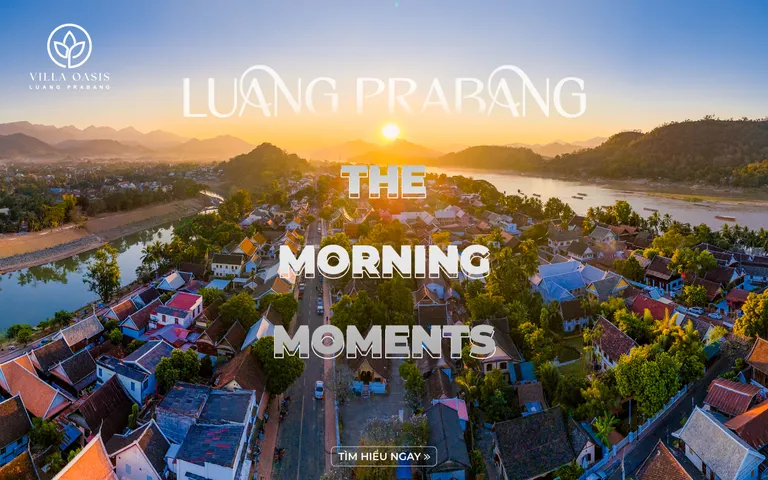
In Luang Prabang, temples are woven into daily life.
From major monasteries in the old town to small neighborhood temples by the river, spiritual presence is everywhere.
The sound of temple bells at dawn and the daily alms-giving ritual have become iconic images of the city’s peaceful rhythm.
Experiencing Lao Culture Through Thoughtful Accommodation
To truly appreciate Laos’ Buddhist heritage and slow way of life, travelers often choose quiet, nature-oriented accommodations.
Villa Oasis Luang Prabang offers a peaceful retreat where guests can unwind after temple visits and immerse themselves in the gentle atmosphere of Luang Prabang.
Conclusion
With more than 1,400 temples and the highest temple-to-population ratio worldwide,
Laos is not only a Buddhist nation, but a place where spirituality, culture, and community coexist.
Temples in Laos are not distant monuments they live alongside the people, shaping daily life and preserving cultural identity.
👉 Discover the spiritual heritage of Laos, and let Villa Oasis Luang Prabang be your calm and comfortable base as you explore the heart of Lao culture.